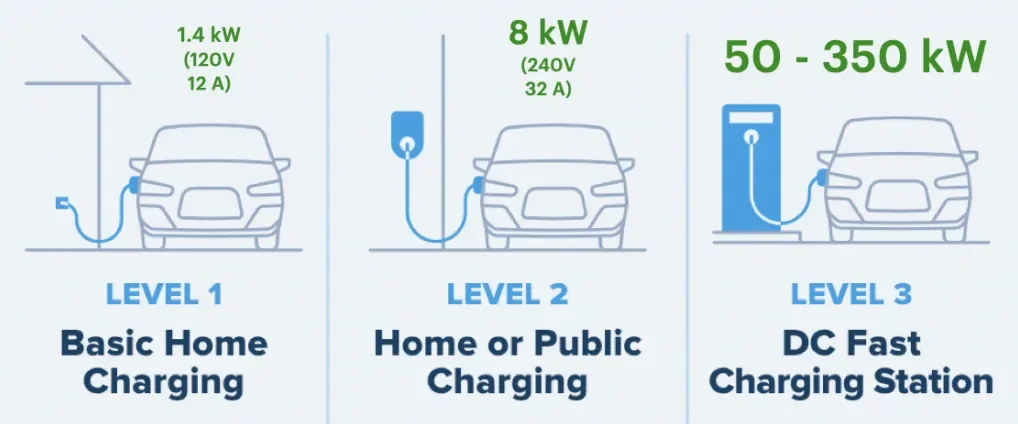
What is Level 3 Charging? Why not Level 2?
We can help with both level 2 and level 3 installs but our investment strategy is built around targeting high traffic, EV dense corridors & neighborhoods that are currently underserved.
Industry surveys prove that EV drivers don't want a one-size-fits-all solution. They prefer cost-effective, overnight Level 2 charging where they live and work, and ultra-fast Level 3 charging along travel corridors when time is short. Our portfolio strategy directly mirrors this consumer behavior.
Level 2 Charging (240v / AC): Smart Utility
The Math: Fully charges a vehicle in 4 to 8 hours.
The Use Case: Ideal for multi-family residential, workplaces, and hotels.
Our Approach: We deploy Level 2 chargers where tenants, residents, and employees naturally park overnight or for the workday, offering a highly cost-effective and essential amenity.
Level 3 Charging (480v / DC / 250kW+) : High-Yield Infrastructure
The Math: Charges a vehicle to 80% in just 15 to 30 minutes.
The Use Case: Ideal for highway corridors, rest stops, and high-traffic retail plazas.
Our Approach: We target Level 3 (DC Fast Charging) where time is a premium. These operate like modern refueling stations, generating high-turnover traffic and premium revenue.